Best B2B Lead Generation Agencies for SaaS (2026) - And Which Ones Actually Work
TL;DR: B2B lead generation for SaaS is no longer about “more leads,” but about engineering predictable pipeline. The best agencies fall into two camps: GTM engineering partners (like Hyper Prospecting) and execution-led outbound partners (like Profitbl). Choosing the right model depends on whether you want to own the system or outsource execution. This guide compares the top agencies, who they’re best for, their strengths, and how SaaS teams should evaluate them.
Ask ten SaaS founders what “lead generation” means and you’ll get ten different answers. For some, it’s booked meetings. For others, it’s SDR outsourcing. For many, it’s simply “more leads in the CRM.”
This confusion is one of the biggest reasons SaaS companies struggle with outbound.
In reality, B2B lead generation in SaaS is not a single activity. It sits at the intersection of go-to-market strategy, outbound execution, qualification, and sales handoff. When any one of these breaks down, results follow suit. Meetings get booked with the wrong accounts. Sales teams lose trust in marketing or outbound. Pipeline looks healthy on paper but never converts.
The agency landscape doesn’t help. Many providers position themselves as “full-service lead gen,” while offering vastly different levels of strategy, ownership, and execution quality.
This guide exists to bring clarity.
Rather than ranking agencies based on popularity or promises, we focus on how they actually generate pipeline for SaaS companies, who they’re best suited for, and what trade-offs each model involves. The goal is simple: help you choose the right type of partner before choosing a vendor.
What B2B Lead Generation Looks Like for SaaS in 2026
SaaS buying has changed. Deals are rarely closed on the first call. Multiple stakeholders are involved. Timing matters as much as fit. And trust is earned gradually, not instantly.
As a result, modern SaaS lead generation must do more than book meetings. It needs to:
Target the right accounts, not just any accounts
Reach buyers when timing and context make sense
Use multiple channels intentionally, not randomly
Qualify interest before sales gets involved
Effective B2B lead generation for SaaS usually falls into one of three models.
The first is GTM engineering. These partners help SaaS teams design, validate, and operationalise outbound systems they can eventually own themselves.
The second is execution-led outbound. These agencies run SDR motions on your behalf, focusing on qualified meetings and pipeline delivery.
The third is volume-led lead gen, where success is measured in activity rather than outcomes. This model is increasingly ineffective for SaaS and is rarely sustainable.
Understanding which model you need is more important than choosing the “best” agency on paper.
How to Evaluate a B2B Lead Generation Agency for SaaS
Before looking at vendors, SaaS teams should ask a few hard questions.
First, who owns the strategy? Some agencies design GTM motions from scratch. Others execute against instructions. Neither is inherently wrong, but the difference matters.
Second, how is lead quality defined? “Qualified” can mean very different things depending on whether BANT, intent signals, or basic interest is used.
Third, what happens if the engagement ends? Do you keep the system, the messaging, and the learnings—or does everything disappear with the agency?
Fourth, which channels are used, and why? LinkedIn, email, and calls all work differently. Good agencies know when to use each.
Finally, how quickly can traction be validated? Early signal matters more than long-term promises.
With that context in mind, let’s look at the agencies SaaS buyers most often evaluate, and what actually differentiates them.
Our Pick: The Best B2B Lead Generation Agencies for SaaS Brands
1. Hyper Prospecting
Best for: Founder-led and growth-stage B2B companies that want to build, validate, and eventually own a repeatable outbound GTM system rather than rely indefinitely on outsourced SDR execution.
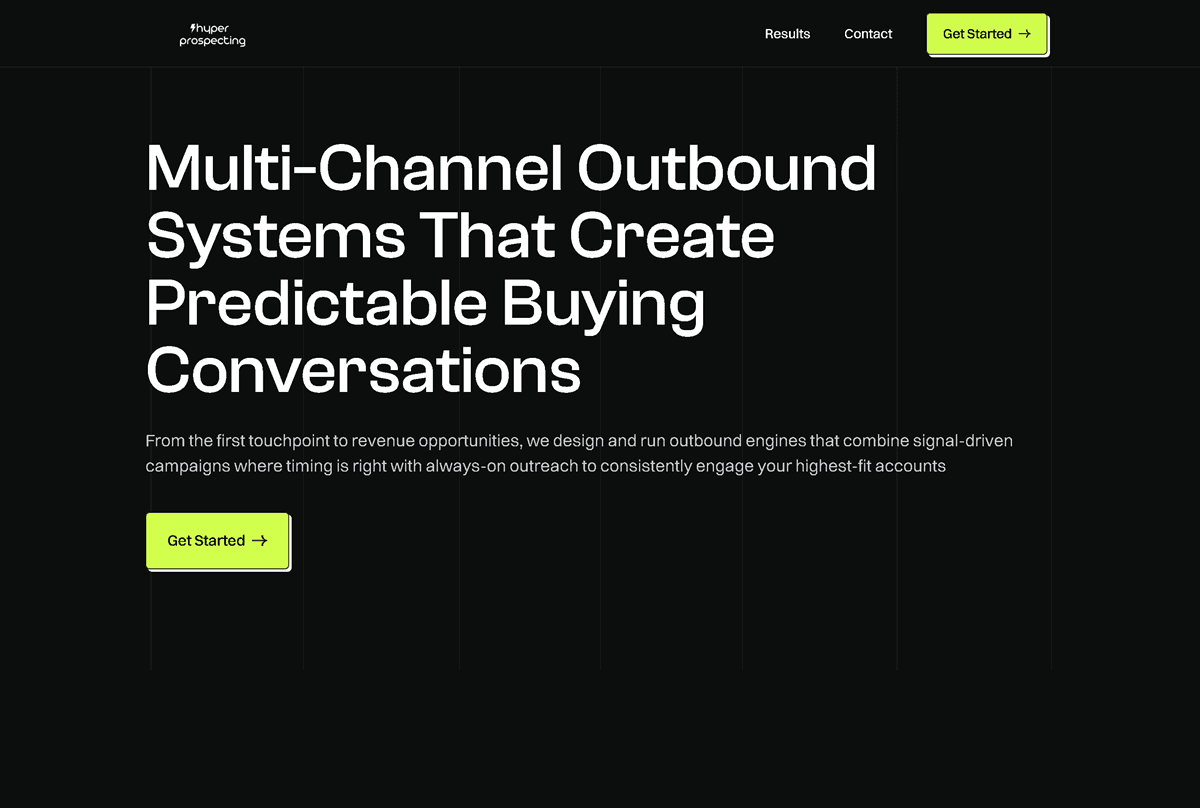
Hyper Prospecting is fundamentally different from most lead generation agencies. It does not position itself as an SDR vendor or a meeting-booking service. Instead, it acts as a GTM engineering partner, helping SaaS teams design outbound systems they can understand, validate, and eventually own.
The focus is on signal-driven outbound, ICP clarity, and validation before scale. Rather than ramping volume quickly, Hyper Prospecting prioritises learning what works, why it works, and how it can be operationalised internally. Early execution is used deliberately to generate signal, prove traction, and de-risk decisions before scaling. Engagements typically follow DFY or DWY models, depending on company maturity and internal capability.
This makes Hyper Prospecting particularly well suited for technical founders and early growth teams who want outbound to become a core internal capability and not a long-term dependency.
Strengths:
Deep GTM and systems-level thinking
Validation-first approach reduces wasted spend
Strong ownership and enablement philosophy
Services:
Outbound GTM design and validation
ICP and segmentation strategy
Messaging and sequencing frameworks
Signal-based outbound systems
Enablement and internal handover
2. Profitbl
Best for: B2B SaaS companies that want predictable, qualified pipeline through senior, multichannel outbound execution without building or managing internal SDR teams.
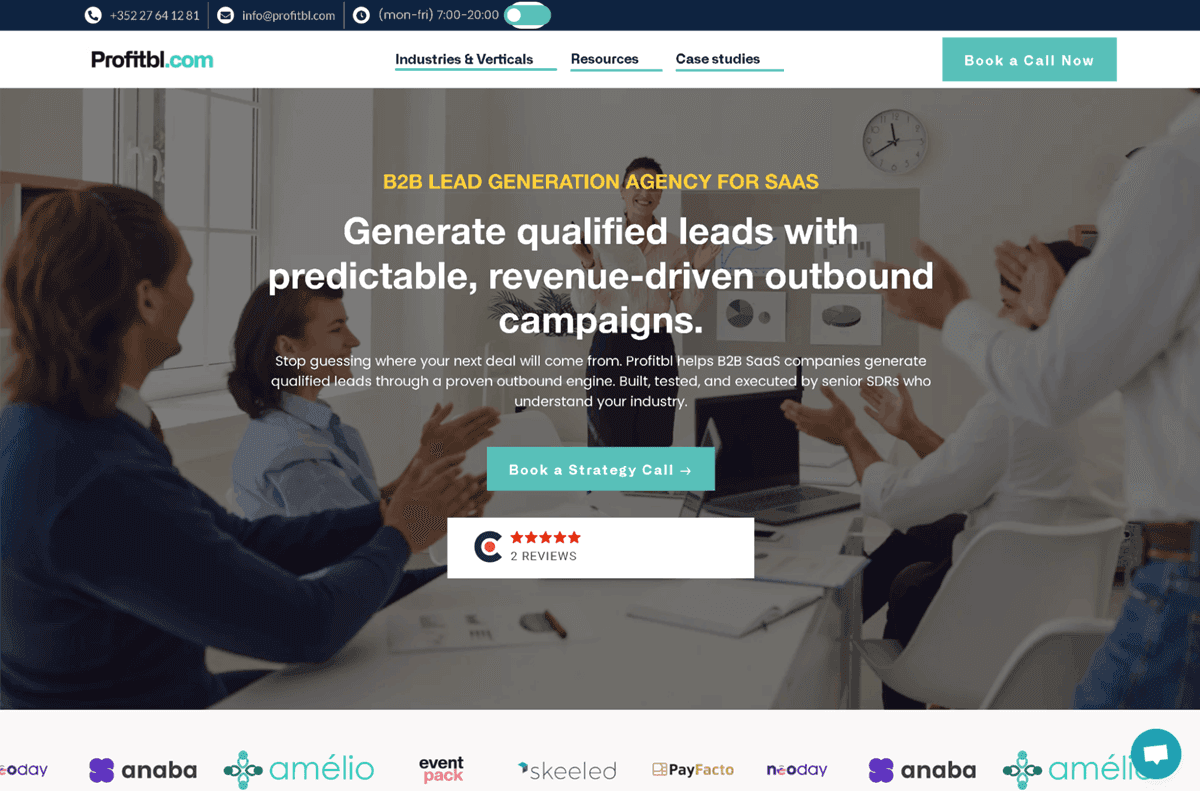
Profitbl operates as an execution-led outbound partner, but with unusually strong GTM alignment upfront. Before outreach begins, campaigns are grounded in ICP definition, positioning, and messaging clarity. Execution is then handled by senior SDRs with 5 - 7+ years of experience and not junior reps or automation-heavy systems.
Outbound activity spans LinkedIn, cold email, and cold calling, with each channel used deliberately rather than indiscriminately. Conversations are qualified using BANT criteria before meetings are booked, ensuring sales teams only engage with accounts that show real intent.
Profitbl is particularly strong in European markets, where cultural nuance, language, and trust play a larger role in outbound success. For SaaS companies that want results without internal SDR overhead, Profitbl offers a high-quality execution model.
Strengths
Senior SDR talent
Strong focus on qualification and pipeline quality
Multichannel execution with intent
European market expertise (especially Benelux and French-speaking markets)
Services
LinkedIn lead generation
Cold email outreach
Cold calling and appointment setting
SDR-as-a-Service
Outbound GTM alignment
3. Belkins
Best for: SaaS companies looking for scalable, outbound-led lead generation across email and LinkedIn.
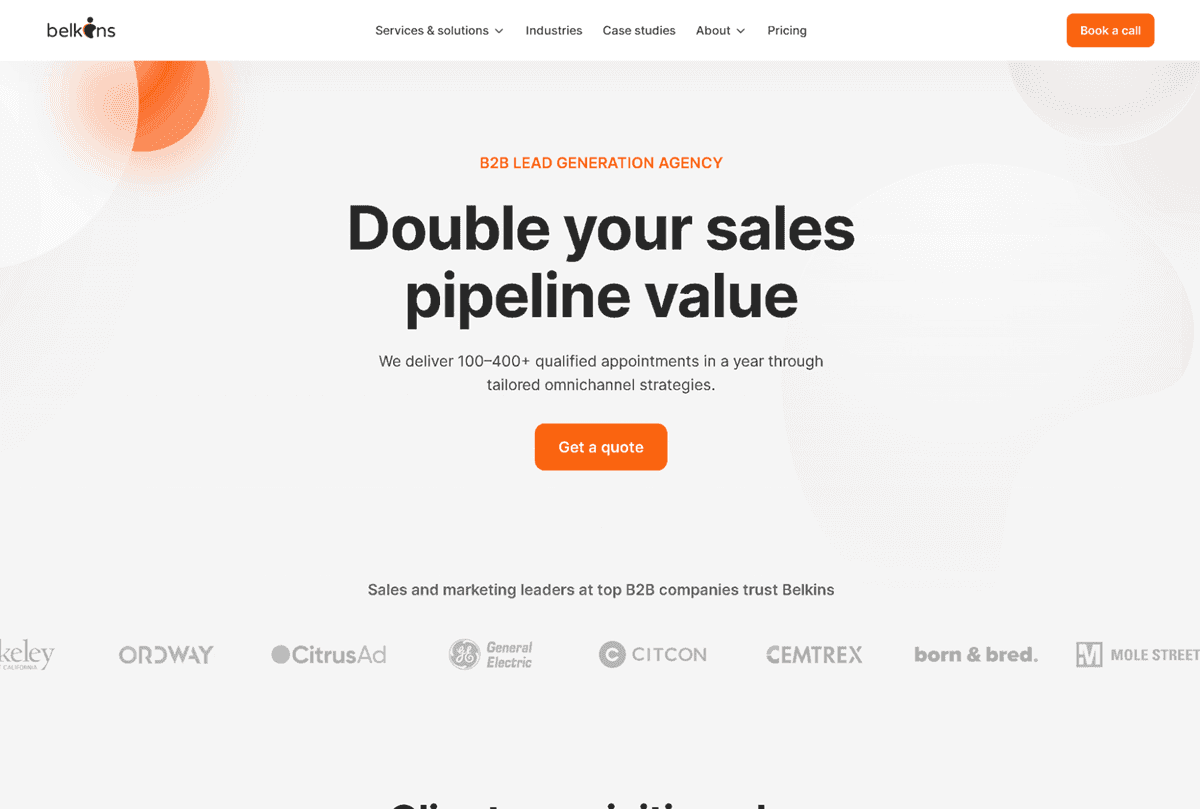
Belkins is one of the more recognisable names in the lead generation space, offering outbound programs that combine cold email, LinkedIn prospecting, and appointment setting. The agency operates at scale and serves clients across industries and regions.
Its strengths lie in infrastructure and execution capacity rather than GTM system design. Belkins is often a good fit for SaaS teams that already understand their ICP and messaging, and simply need an external team to execute outbound at volume.
For companies prioritising coverage and throughput over deep customisation, Belkins can be a practical option.
Strengths:
Scalable global execution
Mature outbound infrastructure
Multichannel coverage
Services:
Cold email outreach
LinkedIn prospecting
Appointment setting
Lead research and enrichment
4. CIENCE
Best for: Mid-market and enterprise SaaS organisations needing structured, process-heavy lead generation aligned with large sales teams.
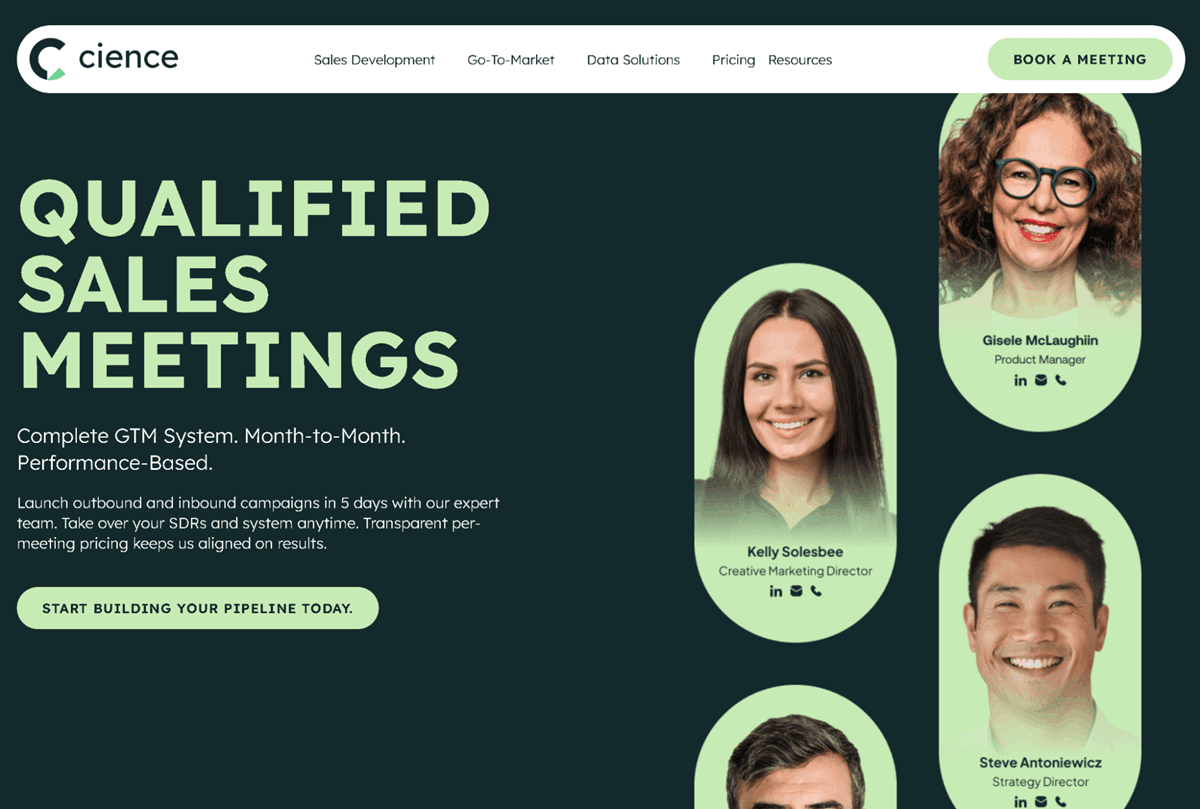
CIENCE operates at the enterprise end of the spectrum. Its lead generation services are highly documented, standardised, and designed to integrate with complex sales organisations. LinkedIn, email, and SDR services are delivered within clearly defined processes and reporting frameworks.
This makes CIENCE a strong fit for larger SaaS companies that value governance, predictability, and scale. It is less suited to early-stage experimentation, but well aligned with established revenue operations.
Strengths:
Enterprise experience
Strong governance and reporting
Scalable SDR teams
Services
SDR outsourcing
LinkedIn and email prospecting
Data enrichment
Appointment setting
5. Martal Group
Best for: SaaS scale-ups that want experienced SDRs running multichannel outbound programs.
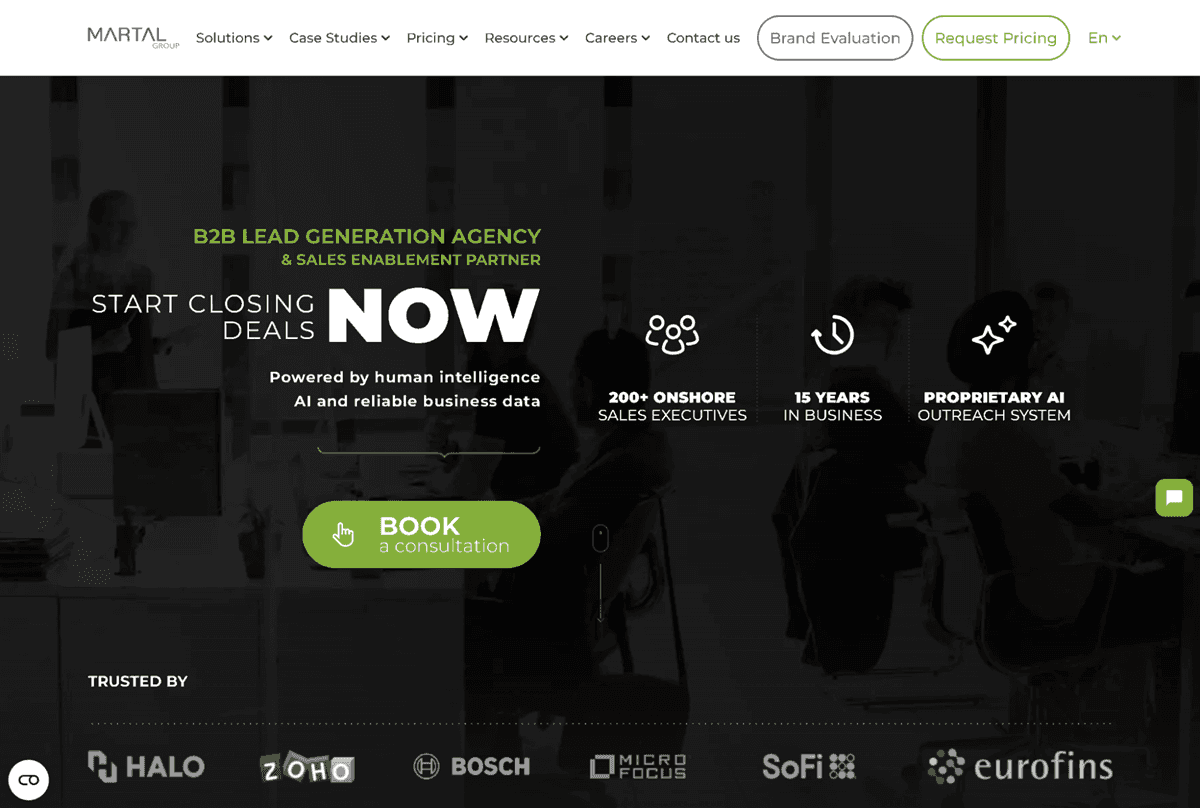
Martal Group positions itself between boutique agencies and enterprise providers. Its SDR teams tend to be more senior than average, and campaigns typically run across LinkedIn, email, and phone.
Martal’s approach works well for SaaS companies that want hands-on execution without the overhead of building an internal SDR team. Onboarding is relatively fast, and reporting is transparent, making it a common choice for growth-stage SaaS businesses.
Strengths
Experienced SDRs
Omnichannel execution
Faster onboarding
Services
LinkedIn outreach
Cold email
Cold calling
SDR outsourcing
6. Sopro
Best for: UK and European SaaS companies prioritising brand-safe, compliant outbound.
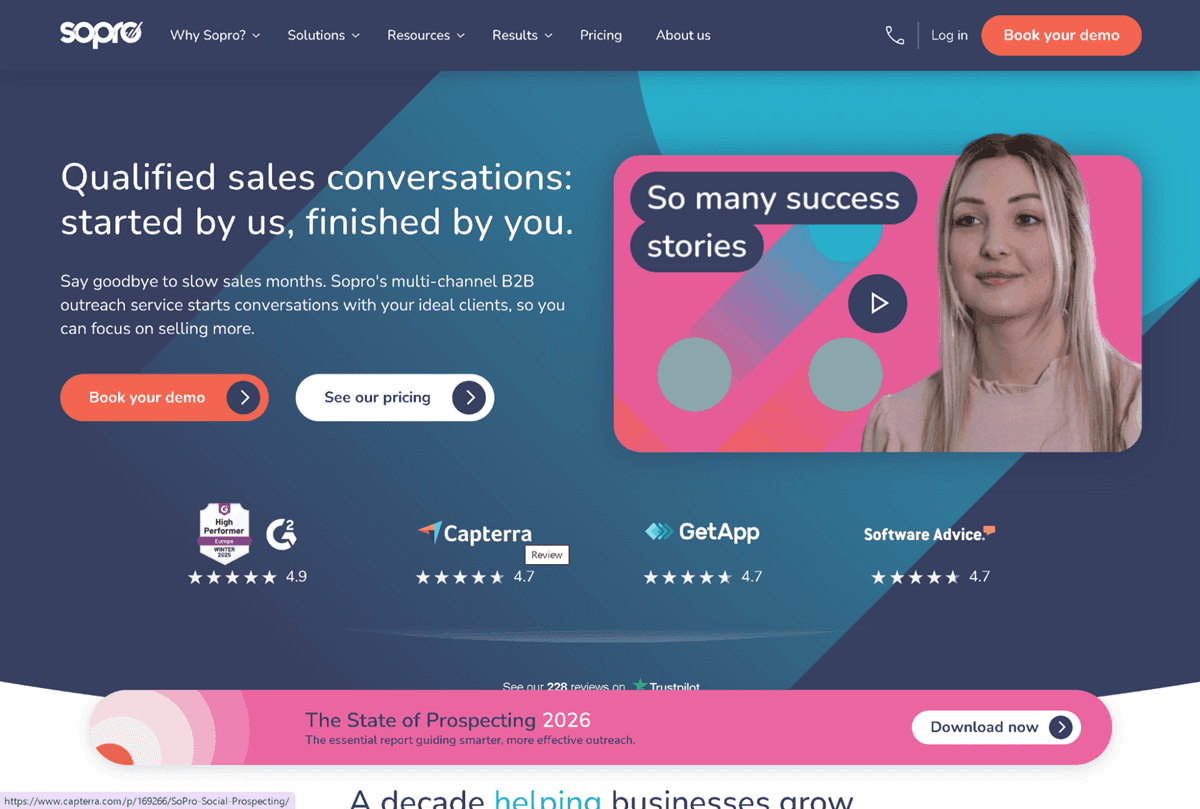
Sopro takes a conservative, compliance-first approach to outbound. Campaigns are designed to protect brand reputation and account health, particularly in European markets where GDPR and buyer sensitivity matter.
While Sopro may scale more slowly than aggressive outbound vendors, it appeals to SaaS companies that value trust, tone, and long-term brand impact over rapid volume.
Strengths:
Strong compliance awareness
Brand-safe execution
European market focus
Services:
LinkedIn outreach
Email prospecting
Account-based outbound
7. Salescode
Best for: Enterprise SaaS and IT firms requiring compliance-led, multi-region execution.
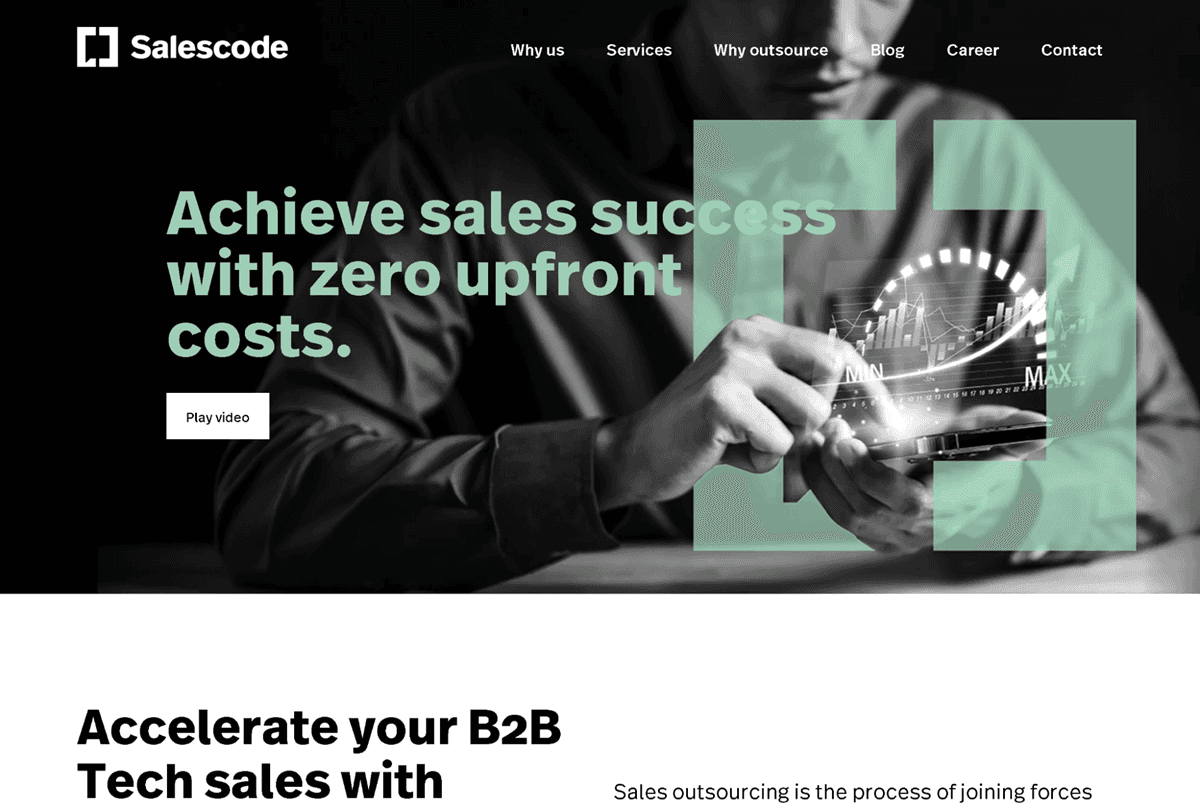
Salescode delivers inside-sales and lead generation programs at enterprise scale. Its ISO-certified processes and global delivery model make it particularly attractive to regulated or risk-sensitive organisations.
The trade-off is flexibility. Salescode excels where structure, documentation, and consistency are required, but is less focused on rapid GTM experimentation.
Strengths:
Compliance and governance
Multi-language execution
Enterprise credibility
Services
Inside sales
Lead generation
SDR outsourcing
Multichannel prospecting
8. Abstrakt
Best for: SaaS companies that want lead generation tightly coupled to appointment setting.
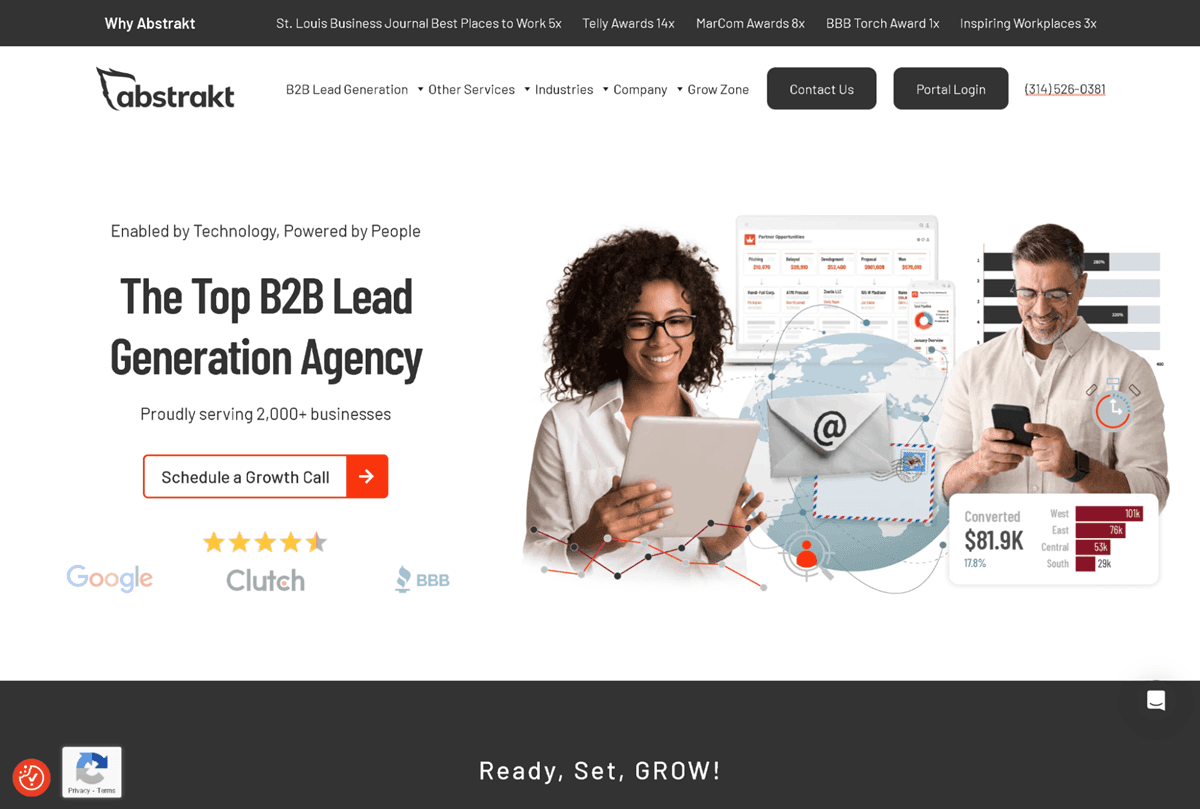
Abstrakt approaches lead generation through a sales engagement lens. LinkedIn and phone outreach are used primarily to drive booked meetings, with less emphasis on long-term GTM system design.
This model works well for companies with clear qualification criteria and a strong closing function, but it may be less suitable for teams still refining positioning or ICP.
Strengths
Appointment-focused execution
Structured outbound processes
Services
LinkedIn prospecting
Cold calling
Appointment setting
9. Revnew
Best for: SaaS teams that want lead generation tied closely to revenue outcomes.
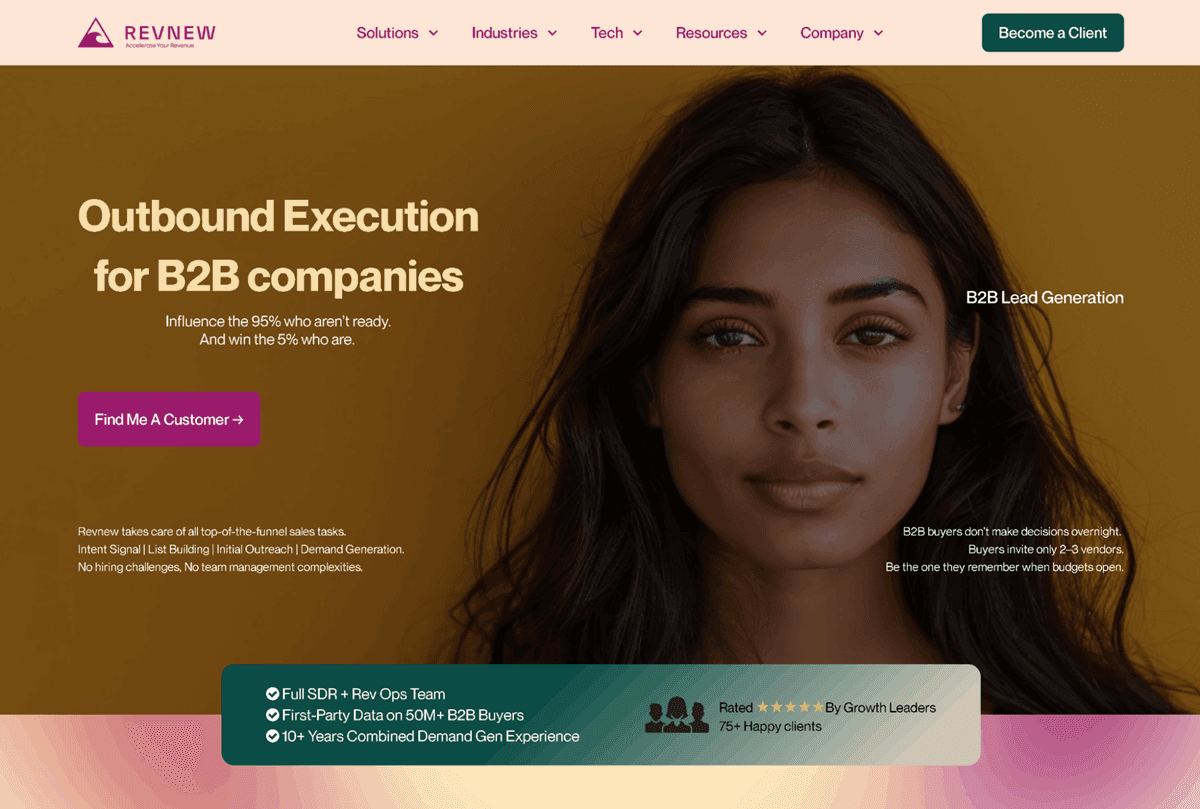
Revnew positions lead generation as a sales-aligned activity rather than a marketing function. Outreach is managed by SDRs with a focus on pipeline contribution and revenue relevance.
This makes Revnew a good fit for SaaS teams that want lead gen tightly integrated with sales metrics and accountability.
Strengths:
Sales alignment
Revenue-focused delivery
Services:
LinkedIn outreach
SDR services
Pipeline generation
10. Intelus
Best for: SaaS and professional services firms that value relationship-driven, personalised lead generation.
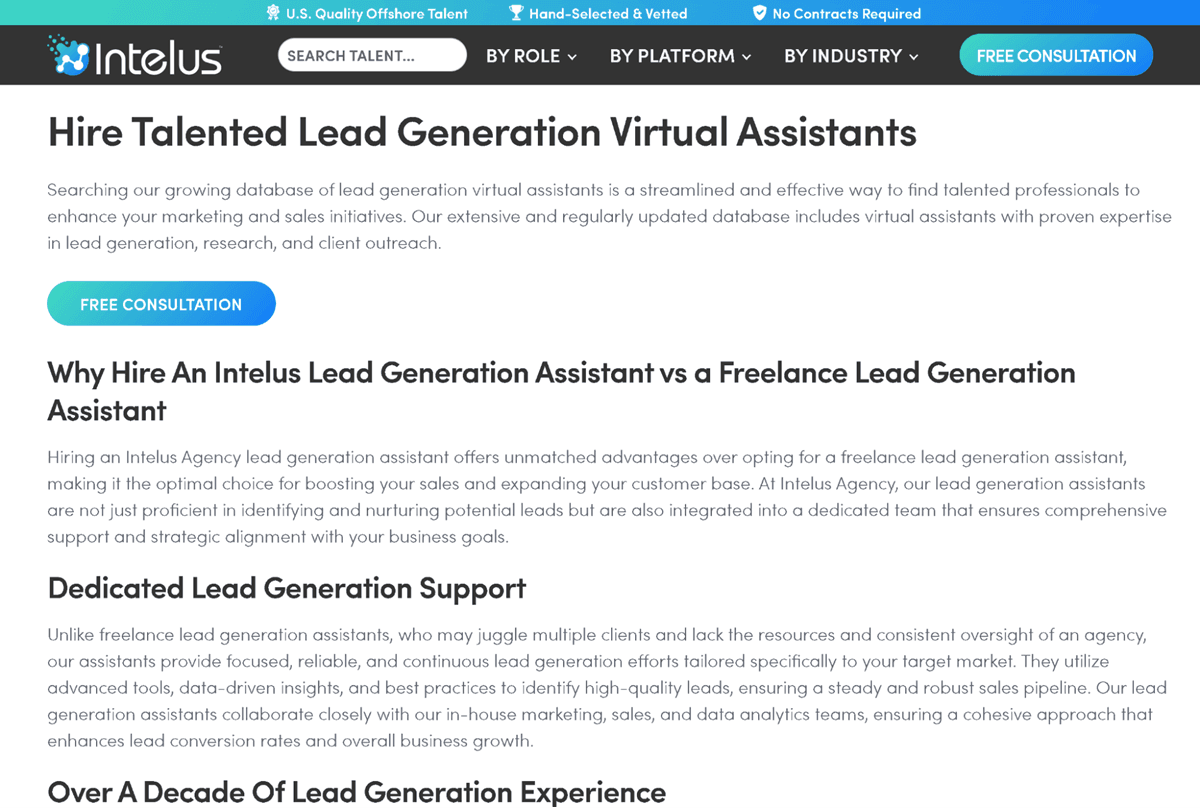
Intelus operates as a boutique agency, emphasising message quality, positioning, and relationship-building over scale. Campaigns are hands-on and often founder-aligned.
This approach suits SaaS companies selling high-consideration solutions where credibility and trust matter more than volume.
Strengths
High personalisation
Strategic messaging support
Services
LinkedIn lead generation
Messaging and positioning
Campaign management
GTM Engineering vs Execution-Led Lead Generation
One of the biggest mistakes SaaS teams make when evaluating lead generation agencies is treating all providers as interchangeable. In reality, most agencies fall into one of two fundamentally different models: GTM engineering or execution-led lead generation.
Understanding the difference between these models is critical, because each optimises for a different outcome.
GTM engineering focuses on designing, validating, and operationalising a repeatable outbound system. Execution-led lead generation focuses on running outbound activity on your behalf. The agency owns day-to-day execution, typically through SDRs operating across LinkedIn, email, and calls.
Here’s a side-by-side comparison.
Dimension | GTM Engineering | Execution-Led Lead Generation |
Primary goal | Build and validate a repeatable outbound system | Deliver qualified pipeline quickly |
Ownership | Client ultimately owns the system | Agency owns execution |
Time to first results | Medium | Fast |
Learning depth | High (why things work) | Medium (what works) |
Dependency risk | Low | Medium to high |
Flexibility | High (system can evolve internally) | Medium (changes flow through agency) |
Best for | Early / growth SaaS building GTM foundations | Growth / scale SaaS needing execution |
Typical outputs | Playbooks, systems, validated motions | Meetings, opportunities, pipeline |
Example providers | Hyper Prospecting | Profitbl, Belkins, Martal Group |
Conclusion: Choose the System, Not Just the Agency
B2B lead generation for SaaS is not a commodity. It’s a system.
The best agencies are clear about what they do, what they don’t do, and where responsibility lies. Before choosing a vendor, decide whether you want to own outbound, outsource it, or blend the two.
When that decision is clear, the right partner usually becomes obvious.